Antequera Dolmens: How Prehistoric Architecture Turned the Landscape into Sacred Space
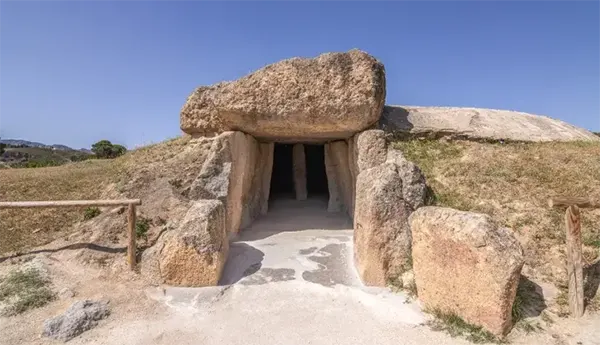
The Antequera Dolmens in southern Spain remain one of the most significant prehistoric monument complexes in Europe. Located in Andalusia near Málaga, the site combines monumental stone construction with carefully selected natural landmarks, creating a rare connection between architecture, astronomy, ritual practice and the surrounding terrain. Archaeologists continue to study the complex because it demonstrates how Neolithic and Copper Age communities shaped their environment not only for practical purposes, but also for spiritual and ceremonial reasons. In 2016, UNESCO recognised the Antequera Dolmens Site as a World Heritage Site, confirming its global historical importance. By 2026, ongoing conservation work and archaeological research have revealed even more about how these ancient builders transformed ordinary geography into a symbolic sacred territory.
The Origins of the Antequera Dolmens and Their Historical Importance
The Antequera Dolmens were constructed between approximately 3800 BCE and 2600 BCE during the Late Neolithic and Early Bronze Age. The complex includes three main monuments: the Dolmen of Menga, the Dolmen of Viera and the Tholos of El Romeral. Each structure reflects different construction techniques and ritual purposes, showing how burial architecture evolved over many centuries. Massive stone slabs weighing several tonnes were transported and positioned without modern machinery, demonstrating a highly organised society with advanced engineering knowledge.
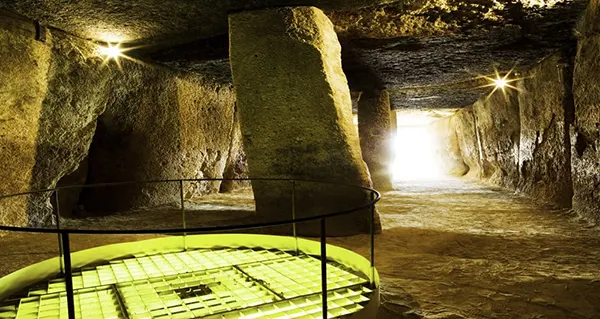
The Dolmen of Menga is considered one of the largest megalithic structures in Europe. Its chamber reaches almost 28 metres in length and contains enormous vertical and horizontal stone blocks. Unlike many European dolmens aligned with the sunrise, Menga faces the nearby Peña de los Enamorados mountain. Researchers believe this orientation was intentional and linked to religious beliefs associated with the mountain’s distinctive human-like profile. This unusual alignment separates the site from other prehistoric monuments across Europe.
The Viera Dolmen presents a more traditional solar orientation. Its passageway aligns closely with the sunrise during the summer solstice, suggesting that seasonal cycles played an important role in local ritual practices. Archaeologists have found burial remains, pottery fragments and stone tools within the monument, offering evidence that the structure served both funerary and ceremonial functions. The combination of astronomy, landscape orientation and collective burial practices reveals a sophisticated worldview connected to both nature and ancestral memory.
Why the Landscape Around the Dolmens Was Considered Sacred
The placement of the Antequera monuments was never random. The surrounding natural formations were integrated directly into the spiritual meaning of the site. Peña de los Enamorados, often translated as “Lovers’ Rock,” dominates the landscape with its recognisable facial outline. Ancient communities may have associated the mountain with protective spirits, ancestral beings or territorial identity. By orienting Menga toward this formation instead of the sun, the builders demonstrated that geography itself held ceremonial value.
Another important natural landmark is El Torcal, a limestone mountain range famous for its unusual rock formations. The Tholos of El Romeral faces this area, creating another deliberate visual relationship between architecture and nature. Scholars studying prehistoric cosmology argue that these alignments formed part of a broader sacred map where mountains, caves and stone monuments worked together as ritual reference points within the landscape.
Modern archaeological surveys conducted during the 2020s have strengthened this interpretation through advanced geographic analysis and digital terrain modelling. Researchers discovered that sightlines between monuments and natural features were carefully planned. These findings support the theory that prehistoric builders viewed the entire region as a connected ceremonial environment rather than a collection of isolated tombs.
Architectural Techniques Behind the Megalithic Structures
The engineering methods used at Antequera continue to attract attention from historians and structural specialists. Builders transported limestone blocks across considerable distances using primitive yet effective systems involving wooden rollers, ropes and human labour. Some stones within the Menga Dolmen exceed 150 tonnes, making them among the largest used in European prehistoric construction. The accuracy of placement demonstrates remarkable planning and coordination.
The Menga chamber was created using a post-and-lintel technique where enormous upright stones support massive horizontal capstones. To stabilise the structure, builders added earth coverings that distributed weight across the monument. This approach protected the interior chamber for thousands of years despite earthquakes, erosion and climatic changes. Recent geological studies suggest that local knowledge of terrain stability played a major role in site selection.
The Tholos of El Romeral introduced a different architectural style inspired partly by Mediterranean influences. Instead of rectangular chambers, the monument uses a circular burial space covered by a corbelled dome. Stones were gradually layered inward until the ceiling closed at the top. This method reflects technological development and cultural exchange between Iberian communities and other prehistoric societies around the Mediterranean basin.
How Archaeology and Technology Changed Understanding of the Site
Scientific methods introduced during the past two decades have transformed research at Antequera. Laser scanning, photogrammetry and ground-penetrating radar allowed archaeologists to analyse internal structures without damaging the monuments. These techniques revealed hidden construction details, underground cavities and evidence of multiple construction phases that were impossible to identify through earlier excavations.
Studies published between 2023 and 2026 also focused on acoustic properties within the chambers. Researchers found that certain areas amplify sound resonance, suggesting that spoken rituals, chants or ceremonial music may have formed part of funerary practices. The interior spaces were therefore designed not only for burial but also for sensory experiences connected to ritual gatherings.
Climate monitoring systems installed at the site now help conservators protect the monuments from humidity fluctuations and increasing tourism pressure. Spanish heritage authorities introduced visitor management measures to reduce structural stress while maintaining public access. These preservation strategies became increasingly important as the site attracted growing international tourism after UNESCO recognition.
The Antequera Dolmens in Modern Cultural and Tourism Context
By 2026, the Antequera Dolmens have become one of Spain’s most important archaeological tourism destinations. Visitors travel to the region not only to see the monuments themselves but also to understand how prehistoric societies interacted with the landscape. Museums and interpretation centres near the site provide detailed exhibitions about megalithic construction, burial customs and ancient astronomy.
The local economy of Antequera has benefited significantly from cultural tourism linked to the UNESCO designation. Guided archaeological routes, educational programmes and heritage festivals now play a central role in regional tourism development. Authorities have attempted to balance economic growth with long-term preservation, limiting excessive commercialisation around the protected areas.
Interest in prehistoric spirituality has also increased public attention toward the monuments. Documentaries, academic conferences and international archaeological collaborations continue to highlight Antequera as a major reference point for understanding European megalithic culture. Unlike many prehistoric sites reduced to isolated ruins, Antequera still preserves the relationship between architecture and natural surroundings that originally defined its sacred meaning.
The Continuing Legacy of Sacred Landscape Architecture
The Antequera Dolmens demonstrate that prehistoric architecture extended far beyond practical shelter or burial functions. The builders intentionally connected stone monuments with mountains, celestial movements and geographic symbolism. This approach transformed the surrounding territory into a ritual environment where nature and human construction operated together as part of shared belief systems.
Modern urban planning and landscape architecture increasingly reference ancient concepts similar to those seen at Antequera. Designers studying historical sacred spaces recognise how orientation, visual alignment and environmental integration influence human perception. Although separated by thousands of years, these prehistoric principles continue to affect contemporary discussions about cultural landscapes and public space design.
The enduring condition of the Antequera monuments reflects both engineering skill and cultural continuity. More than five millennia after their construction, the dolmens still shape the identity of the region and remain central to archaeological debates about religion, astronomy and social organisation in prehistoric Europe. Their survival provides direct evidence that ancient societies possessed complex knowledge systems capable of reshaping the landscape into places of symbolic and spiritual significance.