Aljafería Palace in Zaragoza: How Islamic Architecture Became Part of Spain’s History
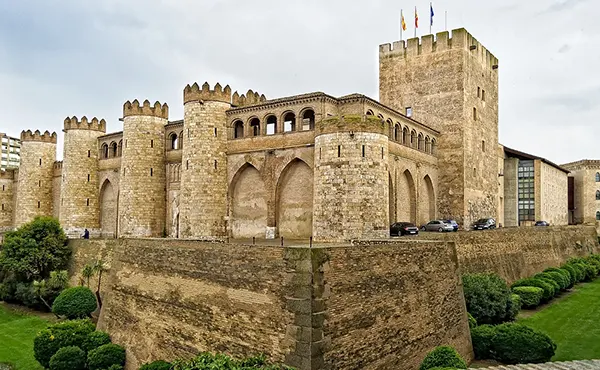
The Aljafería Palace in Zaragoza stands as one of the most distinctive architectural landmarks in Spain, reflecting a period when Islamic, Christian, and later Renaissance influences coexisted within the Iberian Peninsula. Built in the 11th century during the rule of the Banu Hud dynasty, this palace is not only a surviving example of taifa-era Islamic architecture but also a space that evolved over centuries, adapting to new rulers and cultural shifts. Today, it serves as a historical monument that illustrates how Islamic design traditions became embedded in Spain’s broader cultural identity.
The Origins of Aljafería and the Taifa Kingdom of Zaragoza
The construction of the Aljafería Palace dates back to the second half of the 11th century, when Zaragoza was the capital of an independent taifa kingdom following the collapse of the Caliphate of Córdoba. The ruler Ahmad ibn Sulayman al-Muqtadir commissioned the palace as a fortified residence that would also demonstrate political authority and cultural refinement.
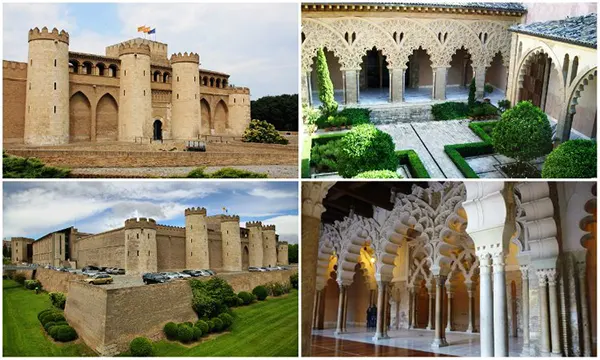
Architecturally, the palace reflects the taifa period’s preference for elegance combined with defensive features. Thick walls, towers, and enclosed courtyards provided security, while decorative elements such as horseshoe arches and intricate stucco carvings conveyed sophistication. These design choices were typical of Islamic palatial architecture across Al-Andalus.
The Aljafería was not merely a residence but also a centre of intellectual life. Scholars, poets, and scientists were invited to the court, making Zaragoza an important cultural hub in medieval Iberia. This context explains why the palace incorporates both functional and aesthetic elements in a carefully balanced way.
Key Features of Islamic Design in the Palace
One of the defining characteristics of the Aljafería is its use of geometric ornamentation and calligraphic decoration. These elements were not purely decorative; they reflected broader Islamic artistic principles, where patterns symbolised order and divine harmony.
The central courtyard, known as the Patio de Santa Isabel, demonstrates the importance of open, symmetrical spaces in Islamic architecture. Water features and gardens originally played a significant role here, contributing to a controlled microclimate and enhancing the sensory experience of the space.
Arches in the palace vary in form, including lobed and horseshoe shapes, which became influential in later Spanish architecture. These structural features would later be adapted in both Mudéjar and Gothic contexts, showing how Islamic techniques were absorbed into local traditions.
Transformation Under Christian Rule
In 1118, Zaragoza was conquered by Alfonso I of Aragon, marking a major turning point in the history of the Aljafería. Rather than demolish the palace, the Christian rulers chose to adapt it for their own use, preserving much of its Islamic structure while introducing new elements.
During the Middle Ages, the palace served as a royal residence for the kings of Aragon. Modifications included the addition of Romanesque and later Gothic features, creating a layered architectural composition that reflects successive historical periods.
This process of adaptation highlights a broader pattern in Spain’s history, where existing Islamic buildings were repurposed rather than replaced. The Aljafería became a physical record of cultural transition, maintaining its original identity while accommodating new functions.
Integration of Mudéjar and Gothic Elements
The Mudéjar style, developed by Muslim craftsmen working under Christian rule, played a crucial role in the palace’s evolution. Decorative brickwork, wooden ceilings, and ornamental motifs were integrated into the structure without erasing earlier Islamic features.
In the 14th and 15th centuries, Gothic additions further transformed the interior spaces. These changes included new halls and structural reinforcements, demonstrating how the palace remained in active use rather than becoming a static monument.
The coexistence of Islamic, Mudéjar, and Gothic elements within a single complex makes the Aljafería a unique example of architectural continuity. It illustrates how different artistic traditions can merge without losing their individual characteristics.
The Renaissance Period and Modern Preservation
In the late 15th century, the Catholic Monarchs commissioned significant renovations, introducing Renaissance-style features to the palace. This phase included the construction of a new royal palace within the existing complex, reflecting changing aesthetic preferences and political ambitions.
Over time, the Aljafería also served military purposes, particularly during the early modern period. These functional changes altered parts of the structure, but many original elements remained intact, allowing historians to trace its development across centuries.
Today, the palace houses the Cortes of Aragon (the regional parliament), combining its historical role with a modern institutional function. Restoration efforts carried out in the 20th and 21st centuries have focused on preserving both Islamic and later additions, ensuring the building remains accessible and historically accurate.
Why Aljafería Matters in Contemporary Spain
The Aljafería Palace represents more than a historical monument; it is evidence of the cultural interactions that shaped Spain. Its architecture demonstrates how Islamic traditions influenced later European styles, particularly in regions where different communities coexisted.
For visitors, the palace offers insight into the complexity of Spanish history beyond simplified narratives. Walking through its halls reveals layers of transformation, from taifa-era luxury to Christian royal residence and finally to a modern civic institution.
As a protected heritage site, the Aljafería continues to be studied and preserved, contributing to a broader understanding of how architectural forms evolve over time. Its survival underscores the importance of conservation in maintaining tangible links to the past.