Andalusia’s White Villages: How Climate, Materials and History Shaped the “Pueblos Blancos” (Ronda, Arcos de la Frontera and Beyond)
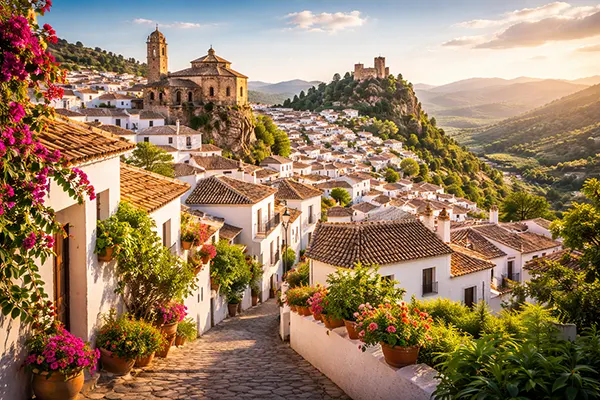
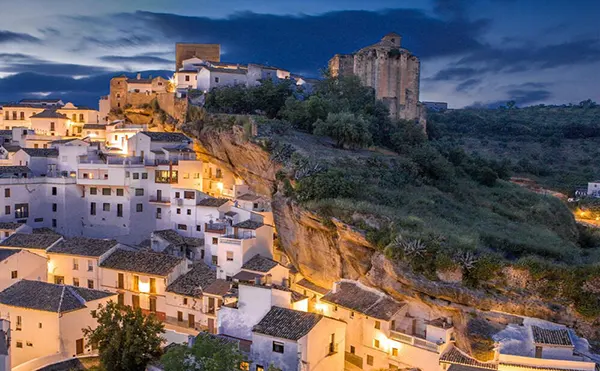
In the hills of southern Spain, a chain of bright white villages sits on ridgelines, cliffs and mountain slopes as if the landscape itself decided where streets should run. These settlements are known as the “pueblos blancos” — the White Villages of Andalusia — and their look is not a decorative trend. It comes from practical choices shaped by heat, local materials, sanitation needs, and centuries of conflict and cultural change. In 2025, they remain one of the clearest examples of how everyday architecture can be a response to climate and history, while still feeling distinctive and timeless.
Why the villages are white: climate, hygiene and local materials
The most direct reason for white façades is temperature control. Traditional whitewashing in Andalusia used lime-based coatings, which reflect sunlight and reduce the amount of heat absorbed by walls. In areas where summer temperatures can be extreme, this mattered long before air conditioning existed. A white exterior can keep indoor spaces noticeably cooler, and it also protects the building structure from repeated thermal stress caused by strong daily heat cycles.
Whitewashing was also tied to hygiene. Lime is alkaline, which makes it naturally resistant to mould and less hospitable to bacteria on surfaces. Historically, limewash became associated with cleanliness and was periodically renewed, especially in dense town centres where narrow streets and close housing made sanitation a constant concern. In practical terms, it was a low-cost way to improve living conditions and reduce problems linked to damp, odours, and disease.
Local availability made limewash an obvious choice. Lime could be produced and applied without specialised tools, and it worked well on the stone, brick and mixed materials used in rural construction. Over time, these repeated layers of whitewash created a consistent townscape that people now recognise instantly. What began as a functional coating became a defining regional identity, reinforced by the intense Andalusian light that makes white surfaces look even brighter.
Moorish design and landscape: why streets feel compact and irregular
Many pueblos blancos developed or were reshaped during the centuries of Islamic rule in Al-Andalus. A key legacy is the compact street pattern: narrow lanes, sudden turns, stepped alleys and small hidden squares. This layout is not random. It creates shade, slows the movement of hot air, and reduces direct sun exposure across the day. It also encourages walking rather than wide-road traffic, which suited the structure of medieval towns built long before modern transport.
Topography reinforced these design choices. White villages are often placed on high ground — cliffs, ridges, or steep slopes — because elevation offered visibility and protection during periods of conflict. A settlement perched above a valley could spot movement early and control key routes. In many towns, you still see castle ruins, defensive walls, and lookout points that explain why the village sits exactly where it does.
As a result, pueblos blancos often feel “vertical”. Streets climb, drop, and loop back because the village follows the terrain rather than forcing a grid onto it. Buildings stack close together, using limited space efficiently, while white façades help brighten tight lanes that might otherwise feel dark. The architecture becomes part of the geography: the village is not separate from the hill, but a continuation of it.
Key pueblos blancos to visit: what makes each one distinct
Ronda is one of the most dramatic examples because the town is split by a deep gorge, El Tajo, with bridges linking the two sides. Its setting makes viewpoints feel unavoidable — almost every walk ends at a cliff edge or a balcony over the valley. Ronda is also a place where layers of history are easy to read: elements linked to Islamic periods sit alongside later Christian-era structures, and the old town retains the compact feel typical of white villages.
Arcos de la Frontera represents the classic ridge-top silhouette: a bright white old quarter balanced above the valley below. The village’s position makes the defensive logic obvious, and the street plan reflects that history. Lanes curve tightly, and viewpoints appear suddenly at the end of short climbs. Arcos is also useful as a reference point for understanding the “de la Frontera” naming, which reflects the former frontier zones between Christian and Muslim territories.
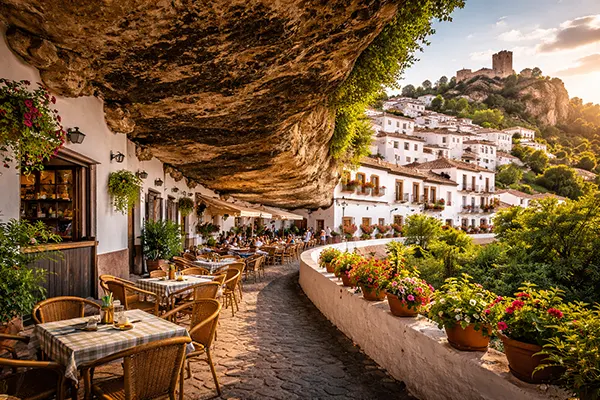
For variety, it helps to compare villages shaped by different geology and terrain. Setenil de las Bodegas is famous for houses built directly under massive rock overhangs, using the cliff as roof and shade. Zahara de la Sierra has a strong fortress character, with a prominent castle position and a sense of watchfulness over the surrounding landscape. Grazalema feels more tied to mountain life and is closely linked to the natural environment of the Sierra de Grazalema area. Frigiliana is known for its photogenic Moorish-style street patterns and carefully maintained white townscape. Vejer de la Frontera offers a coastal-influenced variation, still defensive in layout but with a slightly different atmosphere due to its proximity to the Atlantic.
How to choose the right villages: landscape, walking style and atmosphere
If you want maximum drama in viewpoints, choose villages built around cliffs and ravines. Ronda and Arcos are ideal for this because the terrain shapes the entire experience. You will notice how the built environment pushes you toward edges and overlooks, and how the old quarters concentrate the most distinctive white-village character into compact spaces you can explore on foot.
If you care more about unique building solutions, Setenil stands out because its architecture is inseparable from the rock itself. Rather than relying mainly on whitewash and narrow streets to manage heat, the town uses geology as climate control. The overhangs create shade that remains effective even during the hottest months, and the feeling of streets carved into stone is unlike anything in most other pueblos blancos.
For a calmer pace, mountain villages such as Grazalema can feel more “lived-in” and less like a quick stop, especially outside peak summer. These towns work well for travellers who want walks, local food culture, and evenings that are quieter than the busiest headline destinations. Meanwhile, villages closer to the coast, such as Vejer, can be paired with beach time, creating a route that mixes inland heritage with seaside scenery.
A realistic 2–3 day route in 2025, plus season-by-season travel advice
Day 1: Ronda and Setenil de las Bodegas works as a strong opening because the two places contrast sharply. Start in Ronda for the historic centre and gorge viewpoints, then drive to Setenil for its rock-sheltered streets. The driving time is short enough that you are not sacrificing the day to the road, and the route makes sense visually: one town shows dramatic elevation, while the other shows architectural adaptation to stone and shade.
Day 2: Zahara de la Sierra and Grazalema suits travellers who want the mountain side of the white villages. Zahara gives you a fortress settlement with wide views, while Grazalema provides a slower rhythm and a more nature-connected feel. This day also highlights how villages in similar regions can feel different: Zahara is defined by defensive placement, while Grazalema feels shaped by mountain living and the surrounding landscape.
Day 3 (optional): Arcos de la Frontera and Vejer de la Frontera is ideal if you want to extend into Cádiz province highlights. Arcos delivers the classic ridge-top old town, while Vejer brings a slightly different atmosphere influenced by coastal proximity. Together they show how the “white village” identity remains consistent while adapting to different geographies — valley edges, hilltops, and coastal hills.
When to go in 2025: comfort, crowds and practical timing
Spring (March to May) is generally the easiest time for walking. Days are bright but not at full summer intensity, and you can explore steep lanes without constantly seeking shade. Spring also supports longer itineraries because driving is comfortable and daylight is generous without the extreme heat that can shorten outdoor plans.
Summer (June to August) can still work, but timing becomes essential. The best approach is early morning exploration, a long break in the hottest hours, then late afternoon and evening walks. In summer, you will understand why these towns are built for shade: narrow streets and white façades help, but open viewpoints and uphill climbs can feel demanding in peak temperatures.
Autumn (late September to November) often offers the best balance of light and comfort, with fewer crowds than high summer. Winter (December to February) can be excellent for quiet visits, but mountain towns may feel cold and damp, and weather changes can be more sudden. If you travel in winter, pack layers and plan for shorter days, but expect clearer viewpoints and a calmer atmosphere in historic centres.